AI in wine: how Julia Vineboo uses technology to transform wine content in exciting videos
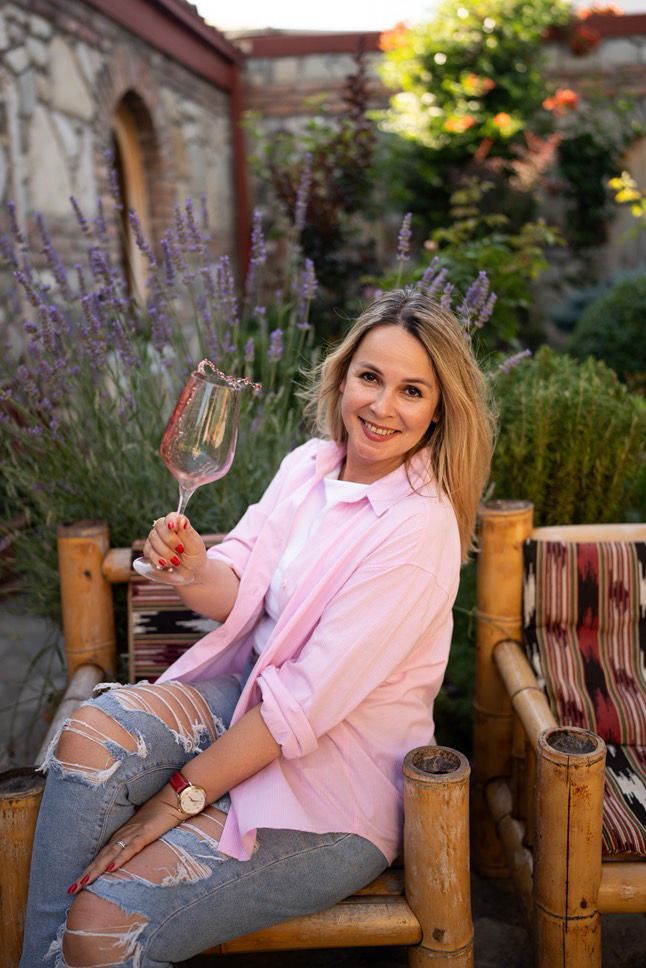
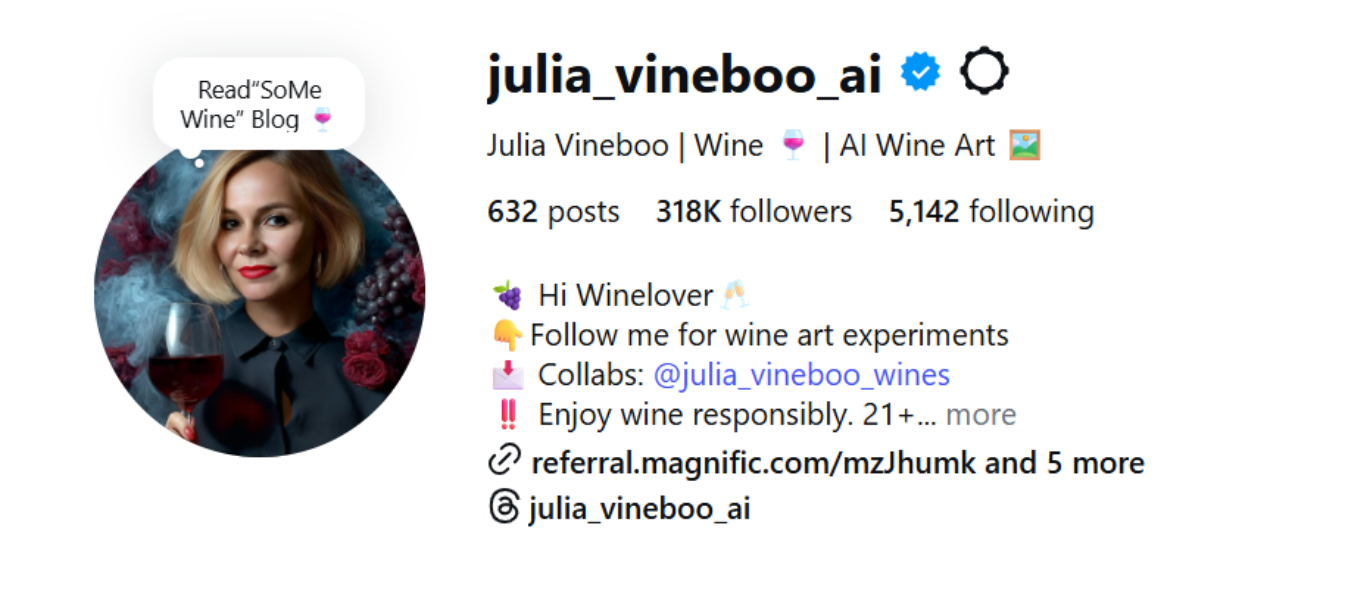
In a wine world increasingly shaped by digital communication and emerging technologies, few voices manage to balance expertise and innovation as naturally as Julia Vineboo.
With over 318,000 followers on Instagram, the Polish-Ukrainian wine influencer has built a reputation for combining solid wine education with forward-thinking storytelling, using artificial intelligence as a creative tool rather than a shortcut.
A WSET Level 2 certified wine professional currently preparing for Level 3, and a Spanish Wine Scholar, Julia represents a new generation of wine communicators for whom education, credibility, and experimentation go hand in hand.
Her back-to-back nominations for the International VinoInfluencers Award in the Wine Marketing category in Spain, recognition among the 17 winners of the 2025 Women in Wine & Spirits Awards in the Top Social Media category, and participation in the International Global Wine Marketing and Media Forum in Georgia reflect a career that extends well beyond social media metrics.
In this interview, Julia Vineboo reflects on the importance of education, the evolving role of AI in wine communication, and the skills wine professionals need to remain relevant today. It is a conversation that offers insight not only into her personal journey, but also into the future direction of wine marketing and storytelling.
Julia, with 318,000 followers on Instagram, you’ve built a strong and engaged wine community. How did your journey into wine begin, and when did you realize it could become both a profession and a platform?
Honestly, wine entered my life unexpectedly. I met my husband, who studied enology, so wine started to appear regularly in the background of our conversations, dinners, and travels. At first, I was simply listening to stories about aromas, regions, and vintages… until one day I realized I wanted to understand this fascinating world myself.
What attracted me most was that wine connects everything I love: history, travel, culture, art, people, and storytelling. One bottle can contain geography, climate, traditions, and even philosophy. Wine is never just a drink - it’s a story.
I started studying seriously, completed WSET Level 2, began preparing for Level 3, and became a Spanish Wine Scholar. Somewhere along the way, I also discovered the power of social media and AI.
That’s when I understood something important: modern wine communication is no longer only about ratings, tasting notes, or perfect images of glasses and bottles. Today, it’s also about emotion, connection, entertainment, and creating moments people want to share together. Even on social media, wine can bring people together - sometimes through a fun Julia Vineboo wine reel where people smile, relate to the moment, and celebrate life together with some good wine.
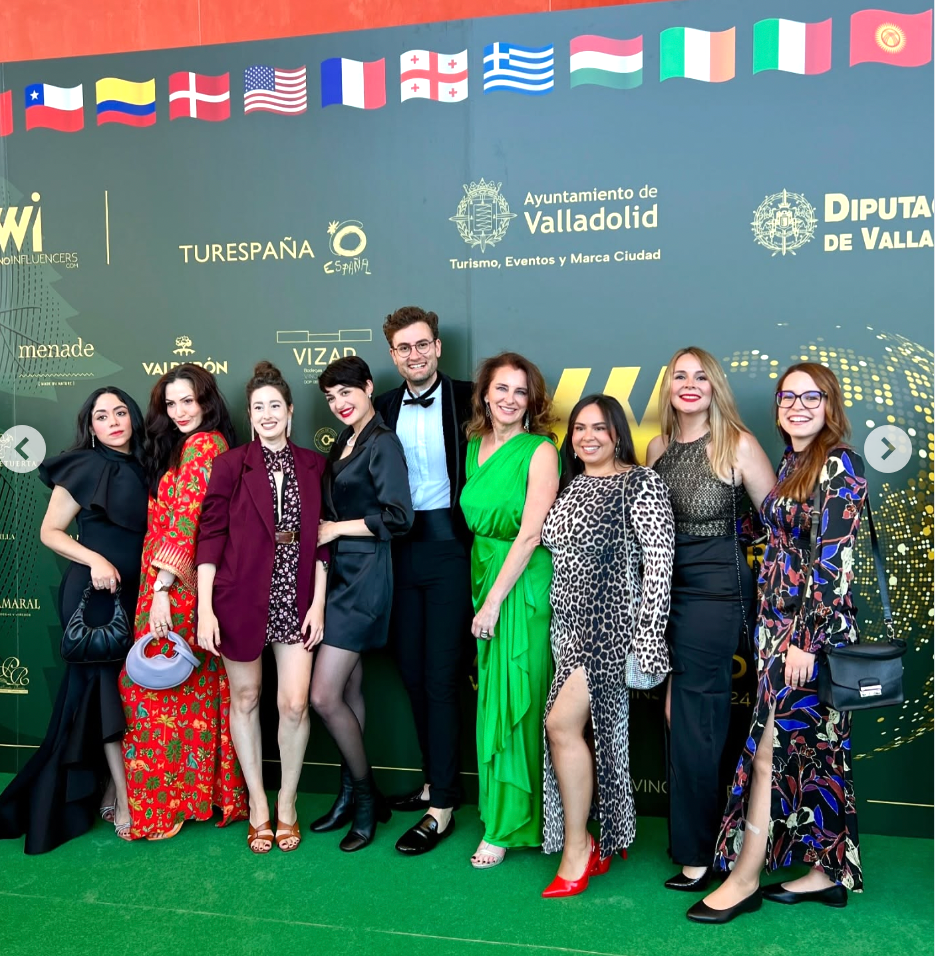
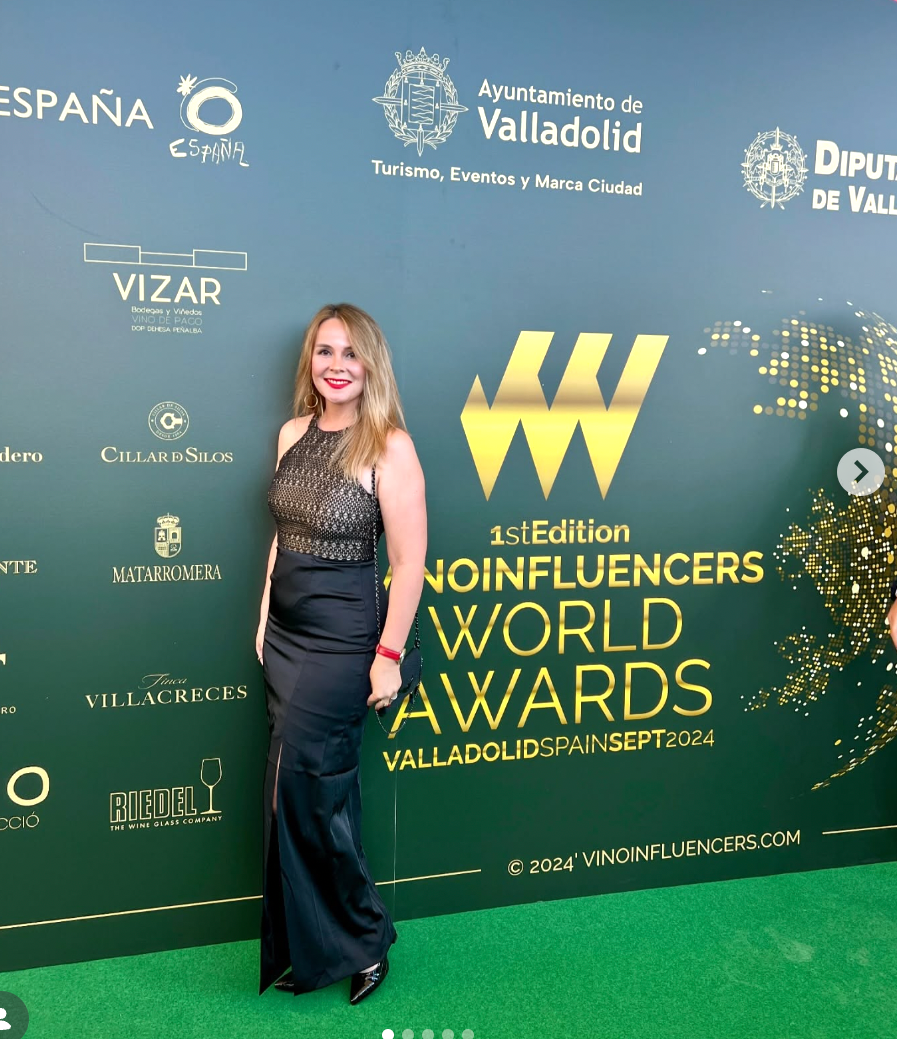
You attended the International Vinoinfluencers World Award in Valladolid, Spain, and were nominated for the Wine Marketing Award two years in a row. What do moments like these represent for you in your career?
It’s a very interesting question because I honestly never thought about this hobby as a career at the beginning. I’m actually a PhD in History, and professionally I worked for years in business development and sales in international corporations. So the fact that, within just a few months of opening my social media account, I became visible to brands and wine organizations like VinoInfluencers felt both surreal and exciting.
Sometimes people think social media is “just entertainment,” but in reality its power is enormous. Today, the world can hear your story in a single day. One video can suddenly reach millions of people. You wake up with thousands of new followers who genuinely connect with your content, support your journey, and inspire you to keep creating. And then you realize: this is no longer only a hobby - it has become a completely new opportunity and potentially a new career path.
At the same time, there is a huge amount of work behind creating quality AI-driven wine content consistently. The technology evolves constantly - new tools appear almost every month, features change, platforms shift, trends move fast. You need to keep learning all the time, experimenting, adapting, and still staying authentic.
So being invited to international events or nominated for awards feels very meaningful to me. It’s confirmation that innovation in wine communication matters and that there is space in the wine world for new forms of storytelling and creativity.
But honestly? The best part has been the people. Meeting wine lovers, creators, sommeliers, winemakers, and professionals from all over the world has been incredible. The wine community is extremely passionate, supportive, and generous. The number of inspiring people and genuine friendships I’ve built over these past two years is something I’m deeply grateful for.
You are WSET Level 2 certified and a Spanish Wine Scholar with the Scholar Guild. How important do you think structured education is in the wine world today, especially for communicators and influencers?
Very important. I think creativity attracts attention, but education builds trust. Today anyone can post a beautiful glass of wine online. But if you want longevity and credibility, you need knowledge behind the visuals.
Wine is a very deep subject and consumers are becoming more informed. Structured education teaches discipline, critical thinking, tasting methodology, context, and precision. It also gives communicators responsibility. When you speak to hundreds of thousands of people, facts matter.
At the same time, education should never make wine feel intimidating or inaccessible. I always try to translate knowledge into something emotional, visual, and approachable. That’s why I believe AI gives us an incredible opportunity - not to become boring educators, but to teach through emotion, creativity, and fun.
People remember stories and feelings much more than technical information alone. If AI can help someone smile, become curious about wine, or finally feel that wine is “for them,” then I think it’s a very powerful tool for modern wine education.
After so much study, tasting, and travel, do you have a favorite wine style, region, or grape variety, or does your curiosity still outweigh preferences?
Curiosity still wins. Always. The more I learn about wine, the more I realize how much I still don’t know. And honestly, that’s the beauty of wine - you never truly finish discovering it. Every region, grape variety, vintage, and winemaker tells a different story.
Emotionally, I do have a soft spot for Spain and Ukraine. Spain fascinates me because of its incredible diversity, deep history, and strong regional identities. I’m a big fan of Ribera del Duero, Cava, and especially sherry wines. I still remember drinking Albariño with oysters after walking part of the Camino near Santiago de Compostela. That combination of Atlantic air, seafood, exhaustion, and wine became unforgettable.
Ukraine is very special to me for deeply personal reasons. Despite the war, the Ukrainian wine industry continues to grow, create, and preserve its traditions. There is something incredibly inspiring about people continuing to make wine, plant vineyards, and build culture even in difficult times.
I also come from Bakhmut, a city in Eastern Ukraine once famous for the historic Artemivsk Winery and its sparkling wines produced in gypsum caves located more than 70 meters underground. For many years, those bottles were part of every family celebration and New Year’s Eve.
The city itself was almost completely destroyed during the war, but the wines still exist today because production relocated to another region of Ukraine. That makes them even more emotional for me. I still keep a few bottles produced before the war, waiting to open them one day when Ukraine wins and peace returns.
That’s probably what wine becomes after some time - not just a beverage or a subject of study, but a collection of emotions, places, d memories bottled together.
Your content stands out for its use of AI-powered videos about wine. What sparked your interest in artificial intelligence, and how did you start applying it to wine communication?
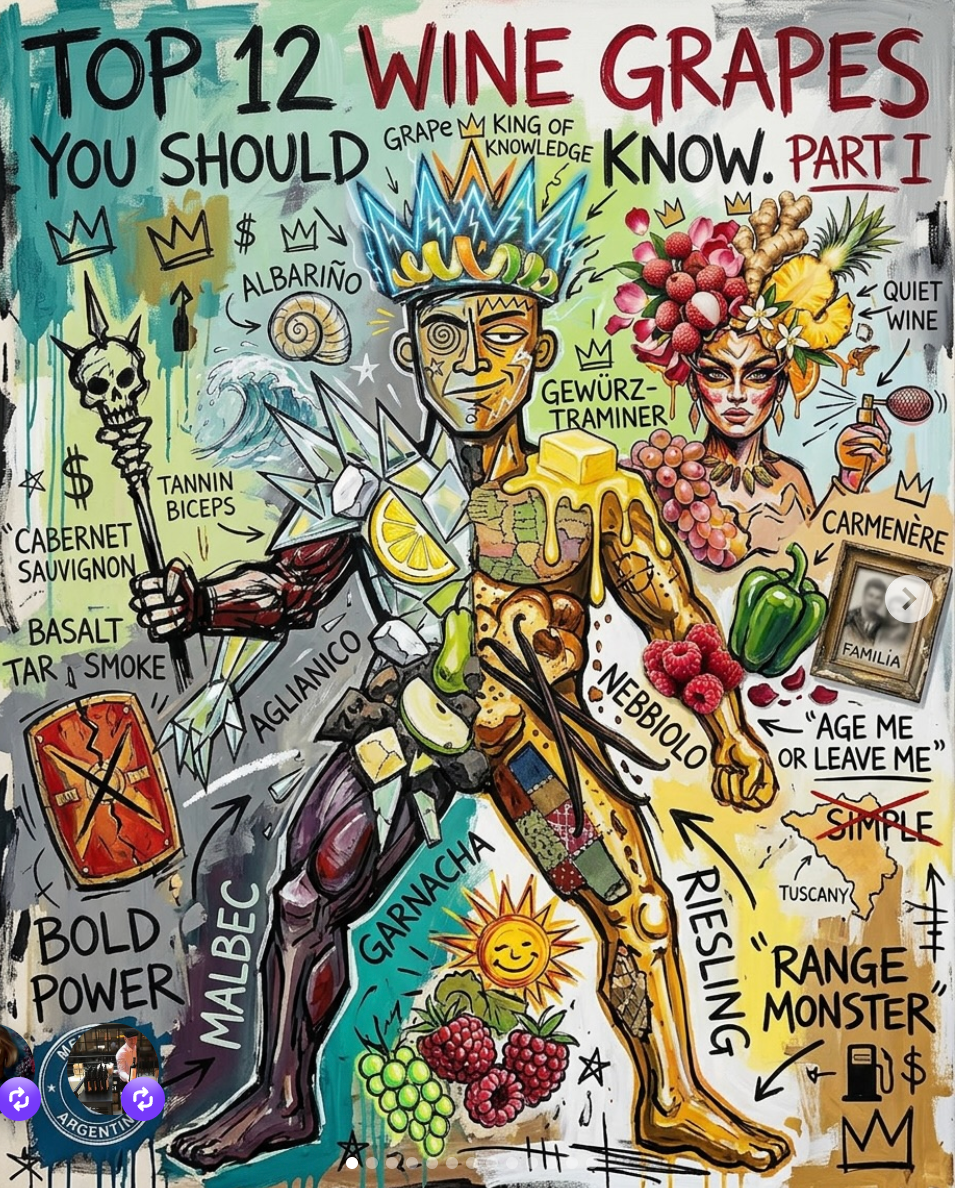
I opened my Instagram account in January 2024 almost as a personal wine diary. But around the same time, I discovered AI image generation through a small webinar about Midjourney. Back then, it felt almost unbelievable that you could create entire visual worlds from imagination alone. The tools were far from perfect, and you had to spend a huge amount of time bringing your ideas to life. Today everybody knows multiple AI tools, but at that moment it genuinely felt like science fiction becoming reality.
That completely changed my direction. I realized I didn’t want to post another static bottle photo people scroll past in one second. I wanted to create memorable, emotional, and entertaining content that wine lovers, wineries, sommeliers, and restaurants would genuinely want to share.
So I started experimenting with AI and wine storytelling - surreal videos, art-inspired visuals, humorous concepts, cinematic wine worlds. At first, I had no idea whether it had any real potential. I was simply curious and wanted to experiment creatively.
And then, within just a few months, the content started going viral. One of my early AI reels brought more than 12M views and 30,000 new followers in just a few days, which gave me huge confidence to continue exploring this direction. Looking at it today, the video feels slightly cringe compared to current technology - but two years ago it felt innovative and fun.
That was the moment I realized how powerful AI could become for wine storytelling and communication. It democratizes content creation and gives people completely new ways to express ideas, emotions, and imagination - even without huge budgets or production teams. Everyone can be an influencer and reach millions of people.
Many wine professionals feel uncertain—or even afraid—of AI. What would you say to those who worry that technology might take something away from the human side of wine?
I completely understand the fear, but I actually think the opposite can happen. Wine is fundamentally human. AI cannot replace the smell of a cellar, a family tradition, a vineyard at sunset, or emotions shared around a table. What AI can do is help communicate those emotions in new ways.
The real danger is not AI itself. The danger is becoming invisible in a world where attention is changing very fast. Younger generations consume information differently, and they are often less interested in wine than previous generations. If wine wants to remain culturally relevant, we need to learn how to speak their language while keeping authenticity.
My account with AI-generated wine content is an extreme example because I’m intentionally experimenting with AI as a creative medium. But for wineries, this is actually an incredible opportunity to become closer to their audience than ever before. I don’t think wineries should create AI-only content, but they can absolutely use AI as a tool to make communication more engaging, emotional, and entertaining.
For example, wineries can create funny wine memes with the help of AI, short educational animations, or even recurring characters - like a cat or dog sommelier explaining wine in a simple and entertaining way. Imagine historical storytelling where a medieval monk explains the origins of wine, or a cinematic reel showing harvest traditions coming to life visually. Even small family wineries can now create content that previously required large marketing budgets and production teams.
That’s what excites me most - AI democratizes storytelling. Today, even a boutique winery with passion and creativity can reach millions of people around the world just in a few days.
Living in Poland, a market that’s still evolving in wine culture, how do you see the role of emerging countries in shaping the future of wine communication?
I actually think emerging wine markets have a huge advantage because they are often more flexible and less trapped by tradition. People in countries like Poland, Ukraine or Romania are very curious, open-minded, and digitally engaged. They’re discovering wine without so many rigid rules. And globally, wine communication is becoming less hierarchical. Social media allows creators from anywhere in the world to influence conversations. You no longer need to come from a traditional wine capital to have a voice.
I also think Eastern Europe has many untold wine stories that the world is only starting to discover now - not only about wine itself, but also about culture, history, resilience, and identity. That creates a very interesting space for modern storytelling.
You were a speaker at a media forum in Georgia. How was that experience, and what kind of dialogue did it open around wine, media, and innovation?
Georgia is amazing because it’s one of the oldest wine cultures in the world, yet at the same time very open to innovation and new ways of communication.
Nino Kinkladze, the founder of Madam Sommelier, created a fantastic platform dedicated to promoting Georgian wine, gastronomy, and culture internationally. She invited wine influencers and professionals from around the world to exchange ideas and best practices in wine marketing and communication.
I’m actually joining the second edition of the forum this week (May 13-21, 2026), where we’ll attend conferences and visit some of Georgia’s most famous wine regions. And honestly, this is a perfect example of what we discussed earlier - emerging countries are increasingly leading important conversations about the future of wine communication.
Last year, there were many discussions about how wineries can stay authentic while adapting to modern media and changing audience behavior. I think this remains one of the biggest challenges in wine marketing today.
Many small wineries produce beautiful wines but struggle with online visibility. I know I’m repeating myself, but I truly believe this is one of the most important messages today. AI tools can genuinely democratize content creation for them.
Today, even a boutique winery with a limited budget can create visually powerful storytelling and potentially reach millions of people worldwide. That’s a huge shift for the wine industry - and it’s exactly what I’m going to speak about during the conference.
What one practical tip about AI would you give to wine professionals, students, or communicators who want to start experimenting without feeling overwhelmed?
Start small and stay curious. You don’t need to become a tech expert overnight. Even using AI to brainstorm ideas, improve captions, generate visuals, or plan content can already save enormous amounts of time.
But most importantly: don’t lose your personality. AI can generate images and videos. But your perspective, your taste, your humor, your experiences - that’s the part people truly connect with.
Technology changes fast. Authenticity never goes out of style. Just show your story to the world.
The time is now.
Info credit: Julia
Photo credit: Gilbert Bages
________________
Salute e alla prossima!
E non scordarti: Sii curioso e assaggia sempre qualcosa di nuovo 🍷
👋🏻 Ciao, sono Mihaela Cojocaru DipWSET
Autrice del libro "Metodo WINExcel" - consigli pratici per esportare i tuoi vini con successo"
Ideatrice dell'Associazione dei venditori di vino WINExcel Association www.winexcel.net
Export Coach 1:1 - WSET Educator - Sommelier AIS - Docente export & digital marketing
Ascolta il podcast SoMe Wine e scopri interviste esclusive e seguimi su Facebook - Instagram - LinkedIn - Youtube - Email